Key Project Hero
Introduction

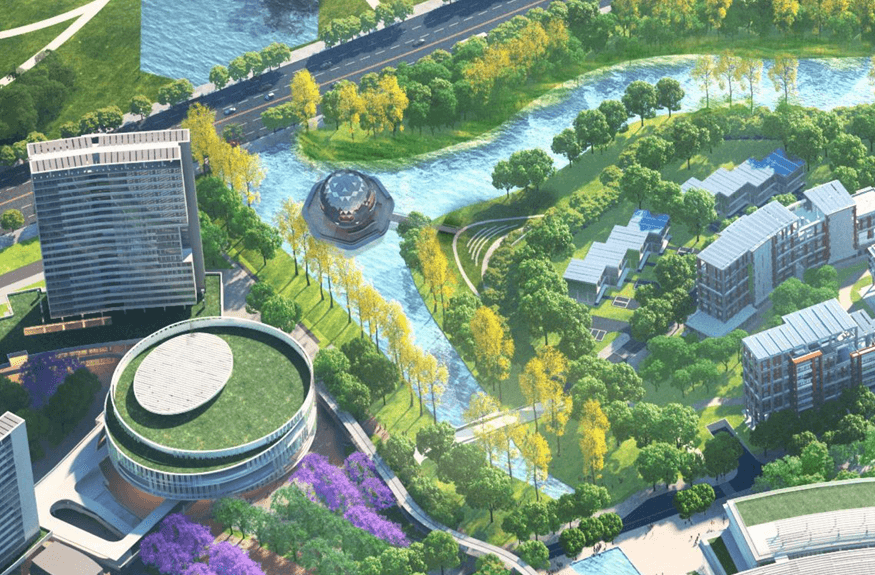
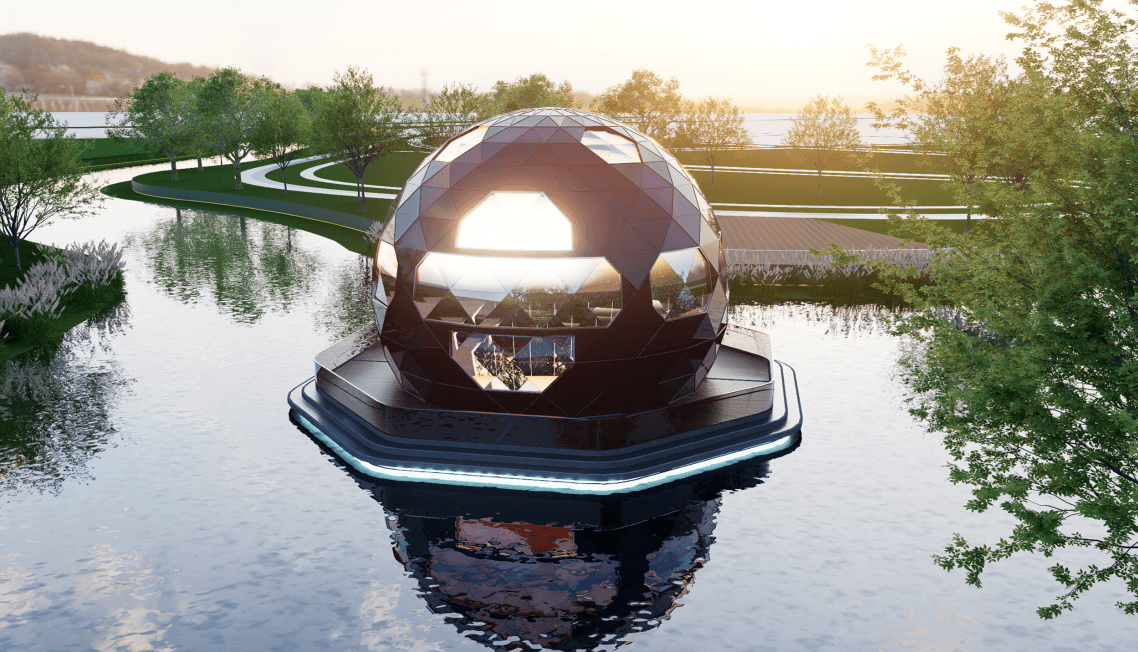
Led by the Center for Engineering Excellence and the Marine Hydrodynamic Research Facility, this project will develop a green, low-carbon, floating, multifunctional, and intelligent demonstration project for human habitats on the open waters north of the HKUST(GZ) campus. It integrates multi-disciplinary research and testing, information sensing and integration, as well as teaching practice and public outreach. 
Brief introduction
Vision
Vision

This project aims to respond to global needs in addressing climate change, developing marine resources, and optimizing campus space. It will help The Hong Kong University of Science and Technology (Guangzhou) build a leading hub for marine engineering research, establish a floating building demonstration project on campus, and further optimize it to achieve self-sufficiency in coastal waters. Ultimately, it will formulate policies and technical white papers related to the offshore human settlements industry, fostering a robust industrial ecosystem. 
Design highlights
Design highlights
Technical Highlights
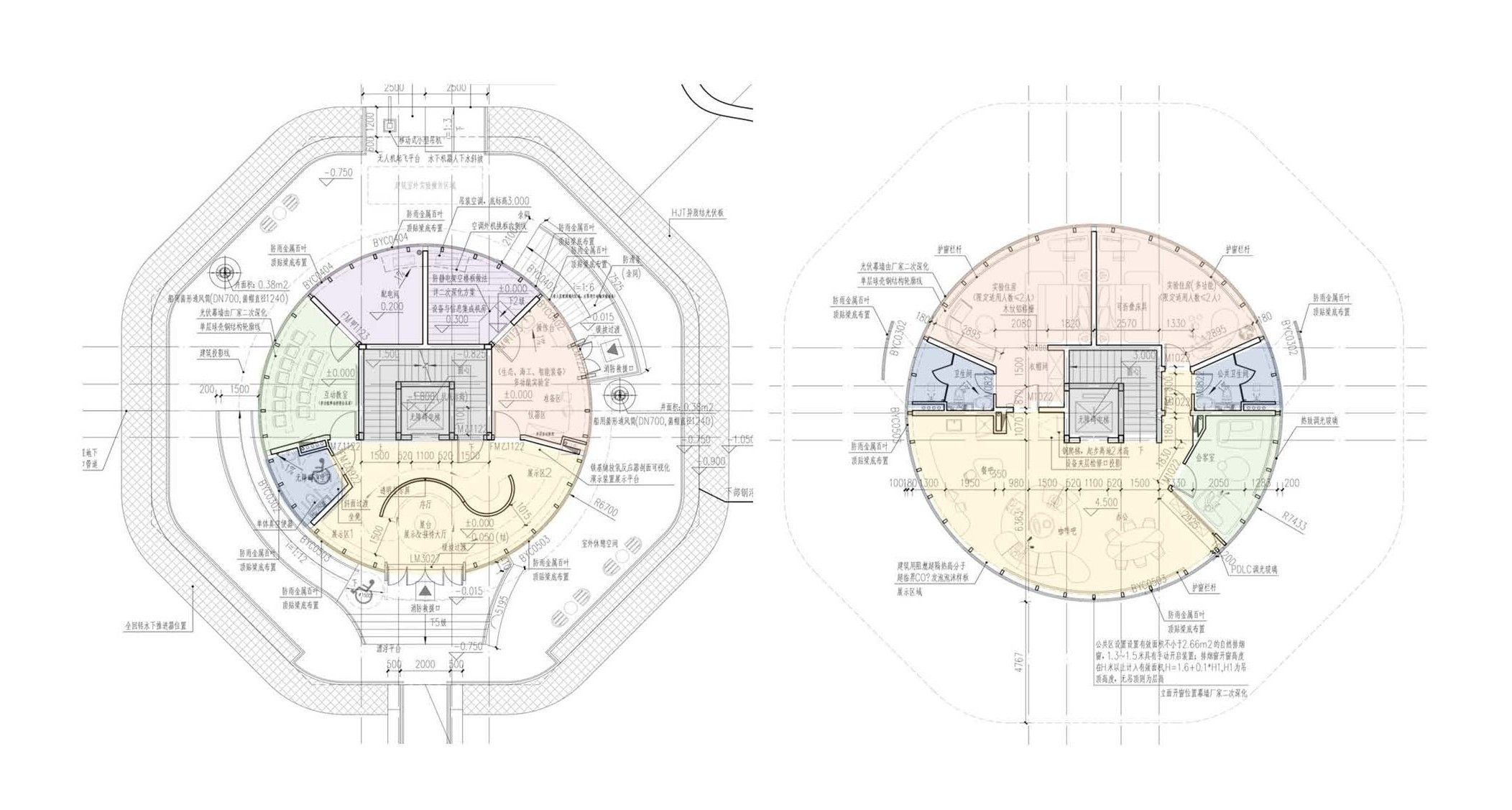
The platform is an environmentally sustainable micro-platform with energy self-sufficiency, smart sensing, and modular design. Its integrated systems include vertical-axis wind turbines, thermotropic glass, water treatment and recycling units, floating structure monitoring sensors, and a digital twin data acquisition system, showcasing both innovative research and practical application.

Research Topics

Insulating glass, transparent displays, and thermal insulation materials
Arrow
W
Weijia WEN
Dean of Function Hub
Thermochromic Dimming Glass: The glass structure is 6T+2M+6T(Low-E)+12A+6T. This product is designed for the transparent enclosure structures of floating projects. The color switching point (LCST) is set at 45°C. In the summer, when sunlight irradiates the glass and the temperature exceeds this threshold, the glass assumes an atomized (frosted) state, providing shading. In the winter, the glass remains transparent, allowing for natural heating through solar radiation. The product functions as a passive movable external shading system. Transparent Screen Device: The standard module dimensions are 240mm × 960mm, with a transparency rate greater than 85%. The display utilizes LED beads, and the overall unit is resistant to aging and yellowing.
Social value and social acceptance of floating building communities
Arrow
阚林戈
Head of UGOD Thrust
Floating Structure Monitoring and Digital Twin
Arrow
Z
Zhilu LAI
Assistant professor at Internet of Things Thrust and Intelligent Transportation Thrust
By deploying data acquisition sensors on the floating platform, superstructure, and other components of the building, as well as in the surrounding environment, motion response data (displacement, vibration acceleration) of the structure during daily operation and environmental data (wind speed, wave elevation) are collected. Based on the acquired data, digital twin modeling, structural response prediction, and environmental parameter inference are achieved.
Self-powered Sensor Nodes for Offshore Habitation Projects
Arrow
G
Guobiao HU
Assistant professor at IoT Thrust
Addressing the energy constraints and sensing requirements of offshore habitation, we research and develop a series of self-powered IoT nodes, including smart floors, HMI buttons, wave energy buoys, and small vertical axis wind turbines. These energy-autonomous and functionally independent nodes facilitate energy conservation, emission reduction, and ubiquitous IoT connectivity in offshore habitation projects.
Multimodal Sensing + Edge-Cloud AI
Arrow
H
Huangxun CHEN
Assistant Professor at IoT Thrust and AI Thrust
By collecting real-time data from sensors—such as cameras and environmental monitors—and equipment operational status deployed both indoors and outdoors, multimodal large models are utilized to create a universal administrator for monitoring, analyzing, and predicting indoor and outdoor conditions.
Underwater ROV Technology
Arrow
Z
Zongxian SU
Lead Engineer at CEE, Practice Professor of Intelligent Transportation Thrust
An underwater robot launch ramp, located close to the water surface, is arranged on the first deck for related experiments.
Lightweight, Flame-Retardant, Ultra-Insulating PP Supercritical CO2 Foaming Material for Construction
Arrow
J
Jun WANG
Assistant Professor at Advanced Materials Thrust and Department of Chemical and Biological Engineering
This exhibition unit features a prepared 50cm × 50cm × 5cm sample of flame-retardant, ultra-insulating polymer supercritical CO₂ foaming material for construction. Compliant with building fire safety requirements, the material achieves ultra-insulation and radiative cooling effects, and the sample is embedded within the wall structure. The display aims to allow visitors to visually observe the material’s texture, structure, and performance, and to experience its lightweight and insulating properties through touch. Accompanying informational panels provide details on its excellent flame retardancy, thermal insulation, corrosion resistance, and its potential applications in offshore habitation architecture.
Off-grid Low-carbon Smart Microgrid
Arrow
T
Teng ZHOU
Assistant Professor at Sustainable Energy and Environment Thrust
The off-grid low-carbon smart microgrid is centered around a retired lithium battery energy storage system, combined with photovoltaics and small-scale wind power. It forms a stable AC bus via bidirectional inverters and is managed by a carbon-intelligent Energy Management System (EMS) for unified dispatch and low-carbon optimization. The system adopts a strategy of “renewable energy priority, storage peak shaving and valley filling, and critical load assurance.” During the day, photovoltaics and wind power supply loads directly while charging the batteries; at night or during periods of low power generation, the storage system discharges to support building energy consumption. When resources are abundant, the intelligent dispatch system dynamically adjusts charging and discharging curves to minimize carbon emissions and energy waste. The EMS also integrates prediction algorithms, carbon emission factor calculations, and multi-energy flow monitoring. This achieves real-time monitoring, visualization, and optimized decision-making for energy consumption and carbon emissions, thereby creating a safe, economical, low-carbon, and sustainable building-level smart grid for energy and carbon management.
UAV-Based Surface Ocean Current Observation Scheme Using the Doppler Effect
Arrow
Q
Qing LI
Assistant Professor at Thrust of Earth, Ocean and Atmospheric Sciences
Using a UAV platform to observe surface ocean currents provides the flexibility to cover a large area based on flight settings while achieving high spatial resolution. It is adaptable to the operational environment of floating platforms and the specific characteristics of the Pearl River Estuary waters, thereby enhancing the monitoring of nearshore flows. Currently, the ADCP is rented from the EESRF Central Laboratory.
Continuous marine ecological monitoring and the impact of floating structures on ecosystems
Arrow
Q
Qing LI, Lanlan CAI
Assistant Professor at Thrust of Earth, Ocean and Atmospheric Sciences
Multi-parameter water quality detection (including dissolved oxygen, pH, temperature, salinity, turbidity, conductivity, resistivity, total dissolved solids, ammonia nitrogen, nitrates, chlorides, etc.), BOD analyzer, chlorophyll content determination, and dissolved pCO2 analyzer. Currently, the equipment is rented from the EESRF Central Laboratory.
Non-contact Full-rotation Underwater Thruster
Arrow
W
Wei HAN
Assistant Professor at Sustainable Energy and Environment Thrust
This project plans to develop a non-contact full-rotation underwater thruster, which is primarily used to test an underwater pod thruster with a power of approximately 3 kW. The focus is on verifying its 360° full-rotation performance, thrust output, rotational control precision, watertightness, and structural reliability.
Indoor Photovoltaic System
Arrow
Y
Yong ZHANG
Assistant Professor at Sustainable Energy and Environment Thrust
This project aims to establish an indoor lighting system based on perovskite photovoltaic modules. As a third-generation photovoltaic material, perovskite is leading the energy revolution with its high efficiency, low cost, and excellent performance under low-light conditions, making it particularly suitable for indoor applications. The photovoltaic system incorporates a variety of advanced modules: semi-transparent modules vividly demonstrate the future scenarios of Building Integrated Photovoltaics (BIPV); wide-bandgap modules showcase their potential for providing high voltage in tandem cells; and standard modules serve as performance benchmarks. By using LED lights to simulate indoor light sources, the system displays power generation data in real time and powers small LED devices, achieving a closed-loop interaction between power generation and consumption.
Continuous Hygroscopic-Evaporation Seawater Desalination Device
Arrow
J
Jian ZENG
Assistant Professor at Sustainable Energy and Environment Thrust
A photothermal seawater desalination device is designed based on a “sodium alginate-calcium chloride” sponge material. By absorbing moisture at the low-temperature end and evaporating at the high-temperature end, it achieves sustainable and passive photothermal seawater desalination. The calcium chloride salt within the material endows it with hygroscopic capacity, while the cross-linking between sodium alginate and calcium chloride immobilizes the salt ions within the material, preventing salt accumulation during the moisture absorption and evaporation process. Due to the osmotic pressure difference during evaporation, the material enables ultra-fast water transport to replenish the water lost through evaporation, thereby supporting rapid evaporation.
Assurance of Human Health and Comfort in Offshore Living Environments
Arrow
R
Rushi DAI
Assistant Professor at Urban Governance and Design Thrust
This project focuses on ensuring human health and comfort in extreme offshore environments, aiming to construct a “sensing-diagnosis-regulation” system based on the interaction between smart furniture and the environment. Addressing core issues such as motion sickness caused by low-frequency swaying and psychological stress arising from long-term confinement in enclosed spaces, the study utilizes non-contact biosensing technology embedded in furniture terminals to monitor occupants’ physiological indicators (heart rate, body movement) and psychological states in real time. By combining Generative AI algorithms, the system drives smart furniture (such as active stabilization beds and circadian rhythm-regulating lights) to dynamically adjust physical and environmental parameters in real time, providing theoretical support and technical verification for resilient human habitats on future deep-sea platforms and in extreme environments.
Microgrid Equipment Health Monitoring and Analysis System
Arrow
Y
Yuxuan LIANG
Assistant Professor at Intelligent Transportation Thrust
By accessing real-time operational data from photovoltaic modules, wind turbines, inverters, battery clusters, and the EMS, this system achieves continuous monitoring of the status of key equipment in power generation, energy storage, and power electronics. It tracks key indicators such as power, voltage, current, temperature, SoC, and SoH. Using time series anomaly detection models, it identifies early signs of failure—such as module degradation, BMS alarms, and battery imbalance—and constructs an equipment health model. This provides the microgrid with intelligent health management capabilities encompassing “monitoring, early warning, fault localization, and recommendation.”
Surface Operation Robot System
Arrow
Y
Yi CAI
Assistant Professor at Smart Manufacturing Thrust
Project Progress
Project progress
Download